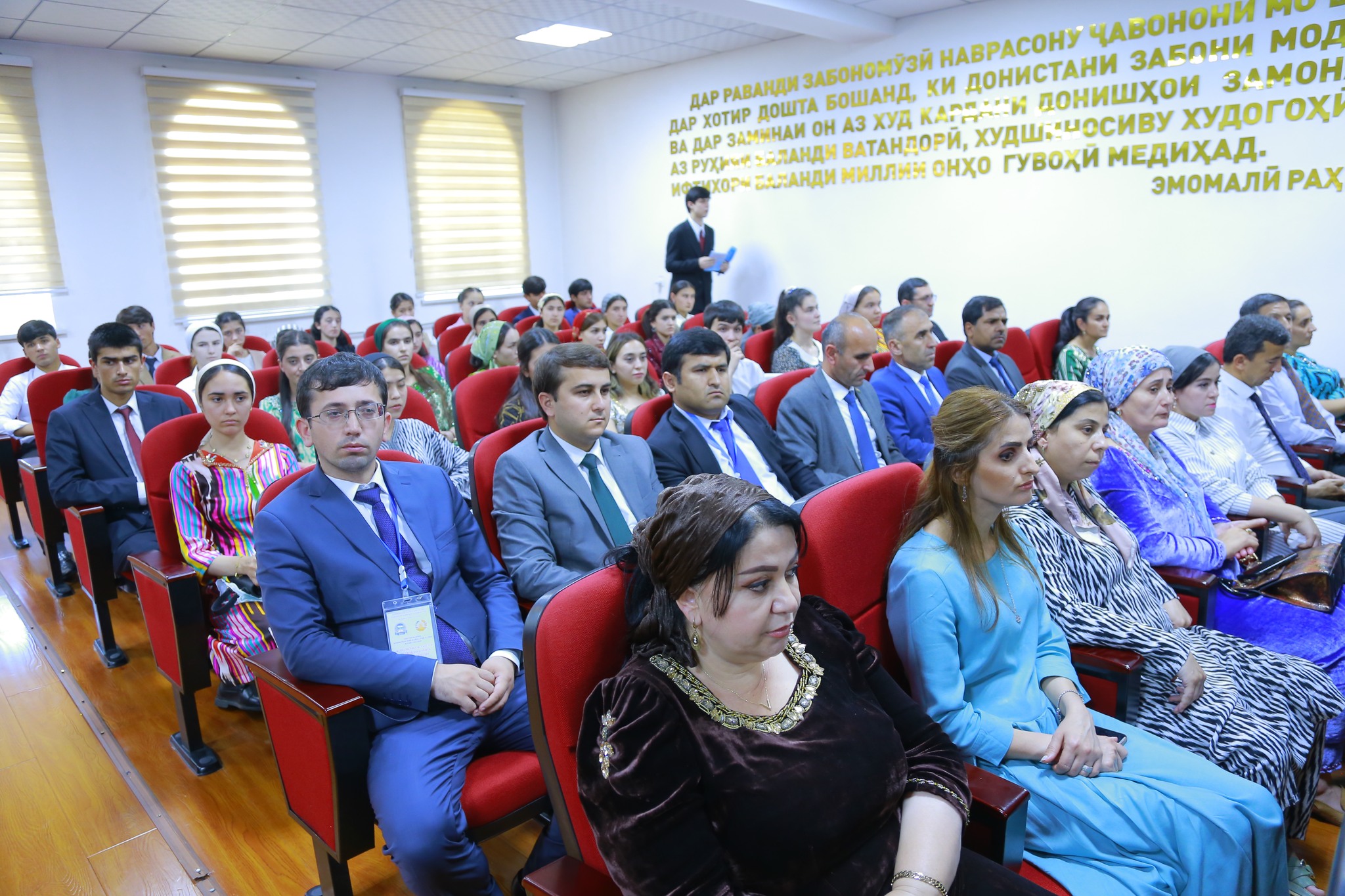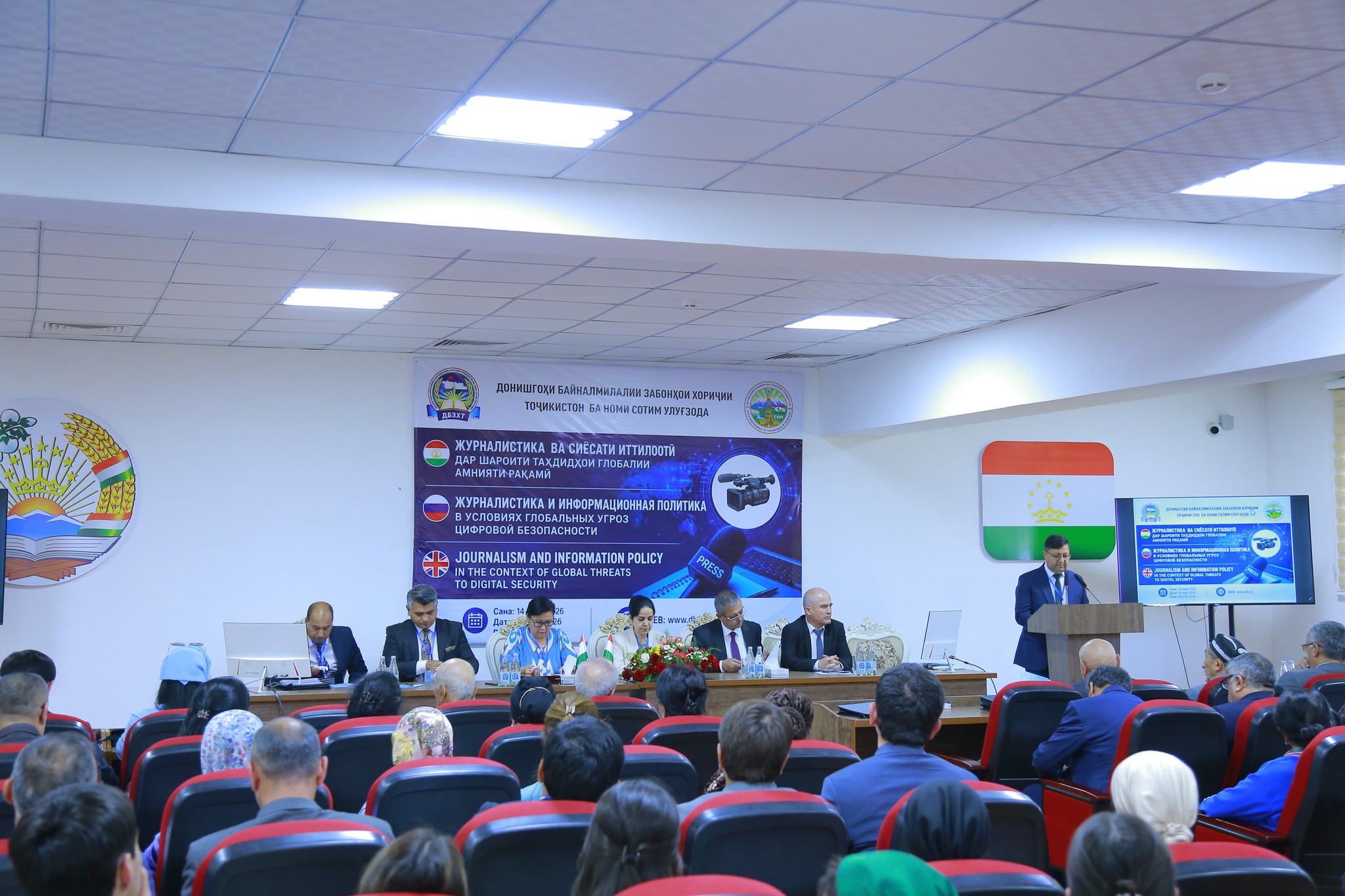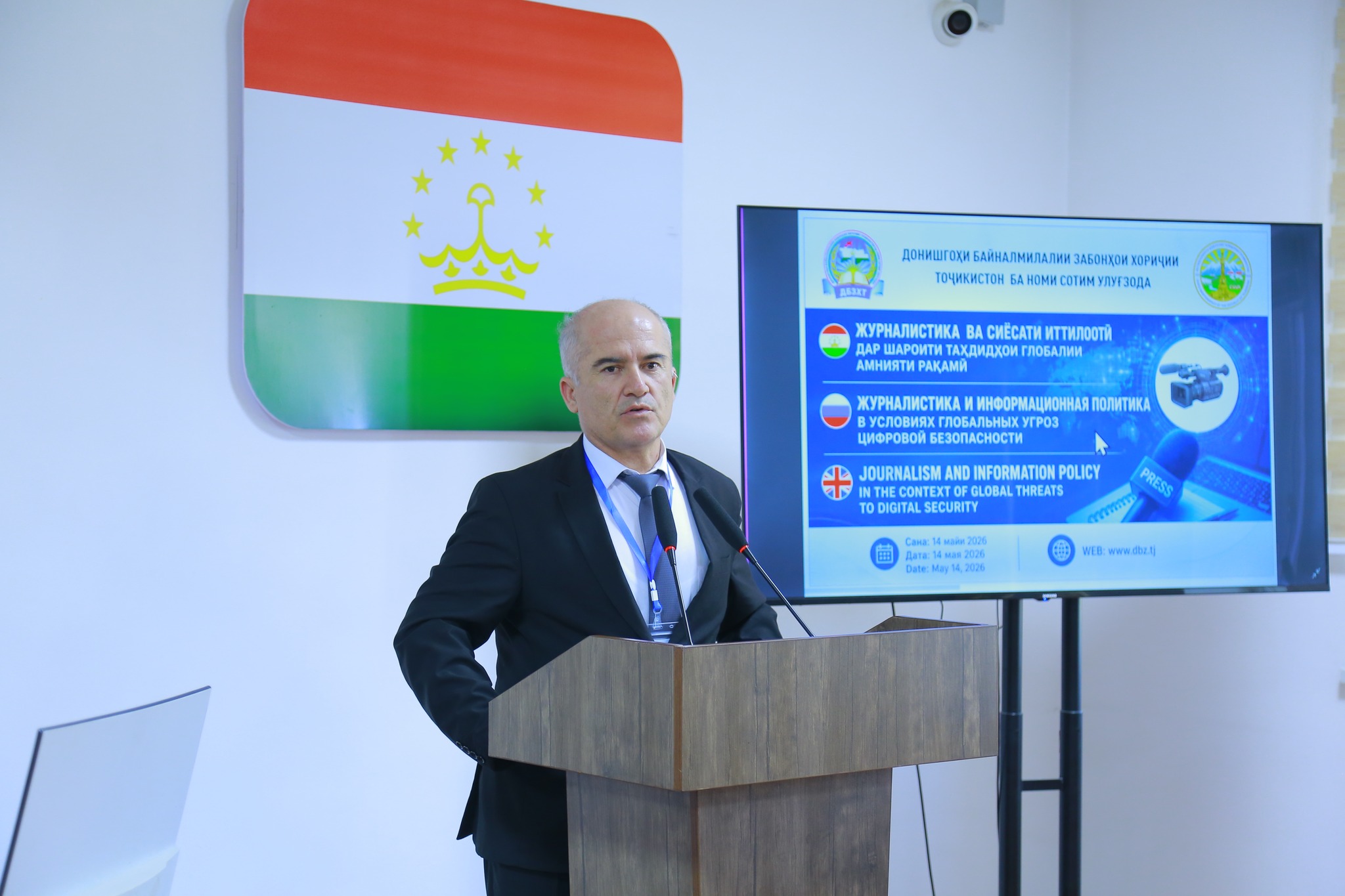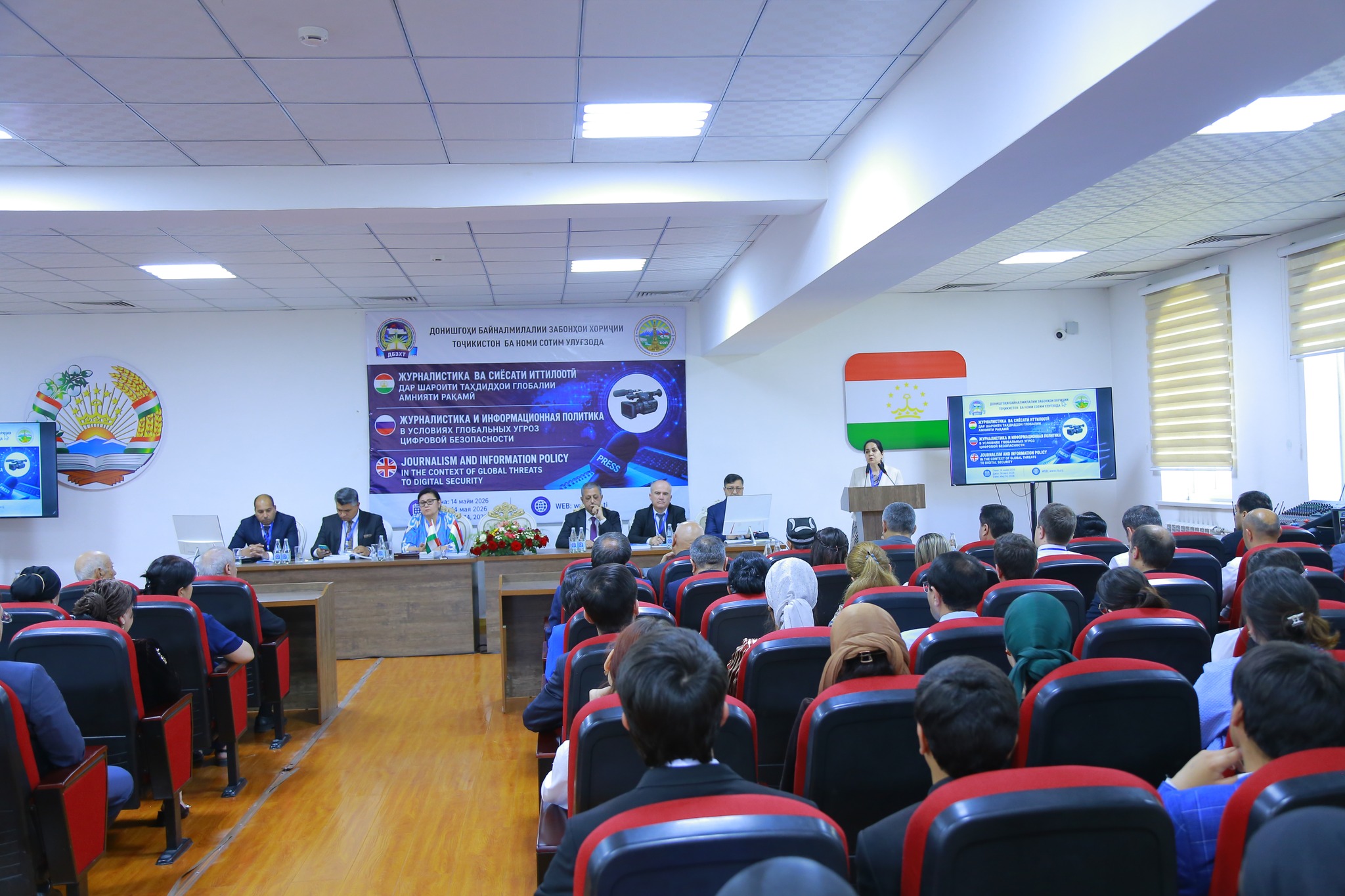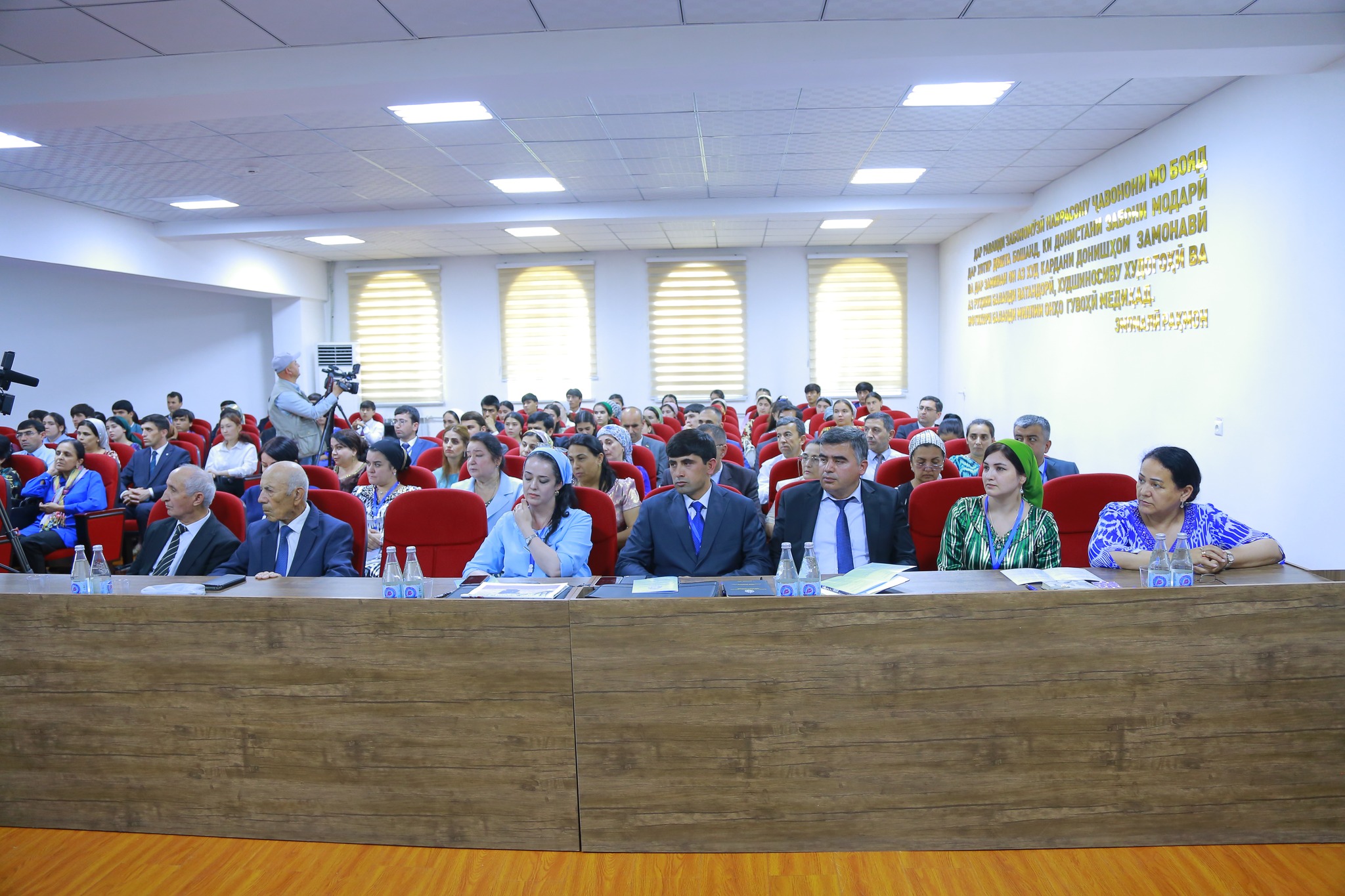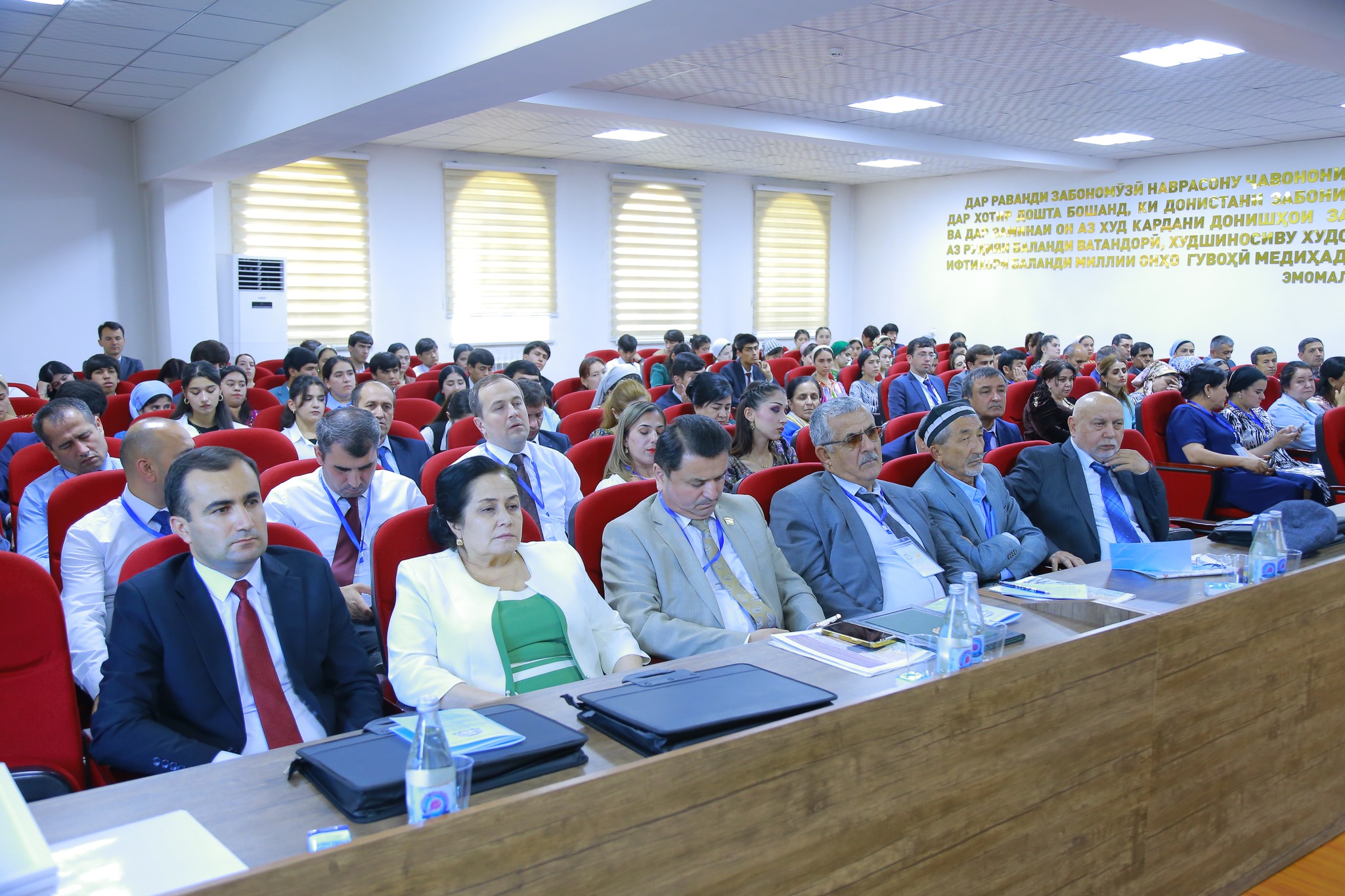
Current issues of modern journalism, information policy, and ways of countering digital security threats were discussed at the international scientific-practical conference titled “Journalism and Information Policy in the Context of Global Digital Security Threats,” held at the International University of Foreign Languages of Tajikistan named after Sotim Ulughzoda. The conference brought together scholars, researchers, and representatives of mass media outlets.
Among the participants were the Rector of the University, Doctor of Philological Sciences, Professor Zhilo Gulnazarzoda; Doctor of Philological Sciences, Professor of the University of Journalism and Mass Communications of the Republic of Uzbekistan, Nargis Qosimova; Doctor of Philological Sciences, Professor and Dean of the Faculty of Journalism of Tajik National University, Bakhtiyor Hashimzoda; journalism researcher from the Islamic Republic of Pakistan, Anjum Mahmood Ahmad; Doctor of Philological Sciences, Professor of the International University of Tourism and Entrepreneurship of Tajikistan, Ilhomjon Hamidiyon; as well as other experts and researchers.
Opening the conference, Rector Professor Zhilo Gulnazarzoda emphasized that in modern conditions the role of media has expanded beyond traditional news reporting and has become a powerful instrument influencing public opinion, worldview, and the political and moral position of society. According to him, under such circumstances, journalism and information policy bear special and decisive responsibility in addressing the growing challenges of digital security threats.
During the speeches, reference was also made to the remarks of the Founder of Peace and National Unity — Leader of the Nation, President of the Republic of Tajikistan, Emomali Rahmon, who has stressed that today mass media have become an effective force shaping public opinion and must play an active role in protecting national interests, strengthening national self-awareness, and promoting the values of a healthy society.
Continuing the conference, Professor Nargis Qosimova of the University of Journalism and Mass Communications of Uzbekistan delivered a presentation titled “Fact-Checking and Media Literacy as Effective Tools for Ensuring Information Security in the Era of Globalization.” Professor Bakhtiyor Hashimzoda presented a paper on “The Future of Journalism in the Coexistence of Humans and Intelligent Technologies.”
At the same time, journalism researcher Anjum Mahmood Ahmad spoke about the role of innovation and information technologies in the development of education, while Professor Ilhomjon Hamidiyon analyzed issues related to media coverage of law-enforcement agencies’ activities in electronic media. The presentations also included discussions on the proper use of social networks, strengthening information culture, and the adaptation of journalism to the requirements of the digital environment.
During the discussion session, Doctor of Philological Sciences, Professor of Tajik National University Murad Murodi and Doctor of Philological Sciences, Professor of the State Institute of Arts and Culture of Tajikistan named after Mirzo Tursunzoda, Zulfiddin Muminjonov, shared their views on the development of modern sciences, effective study of digital information, and the significance of contemporary journalism within the higher education system.